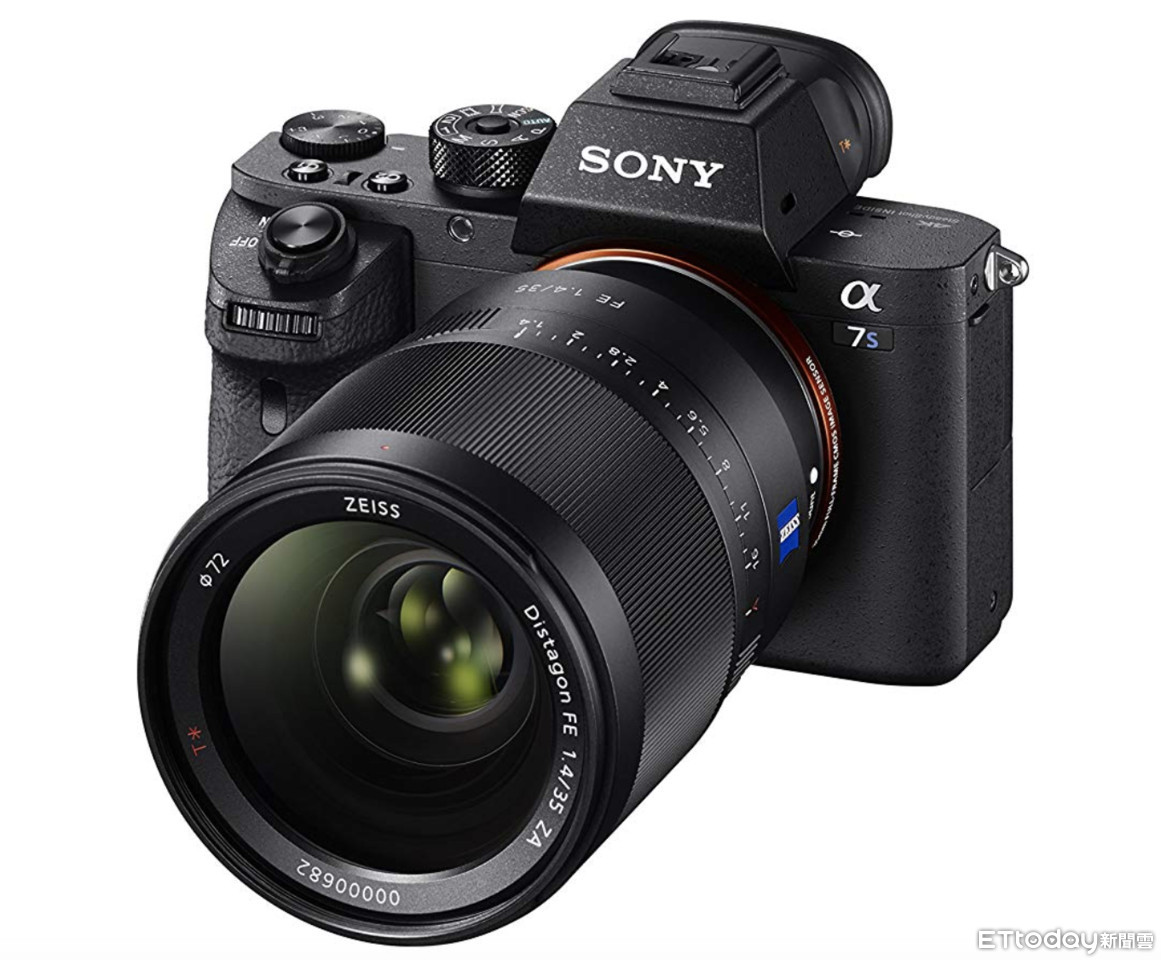
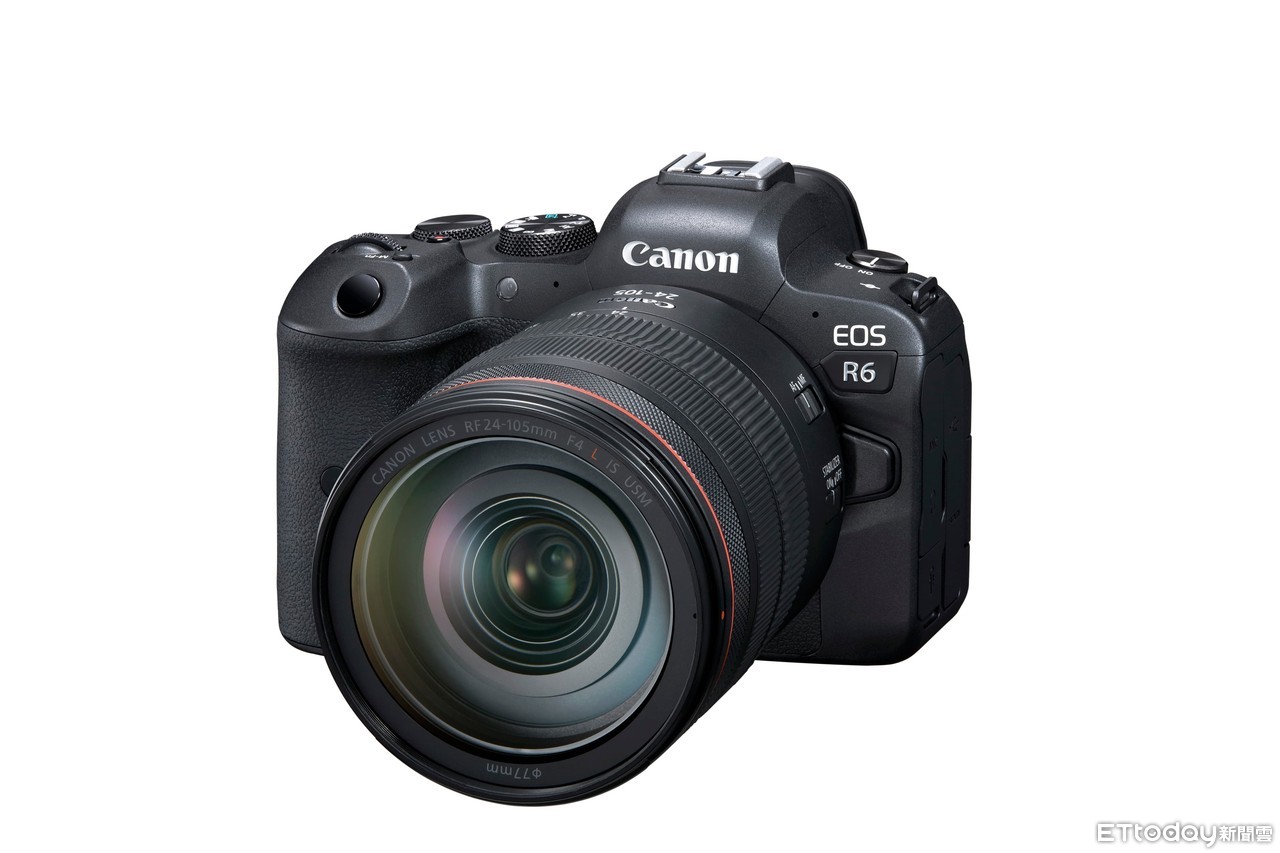
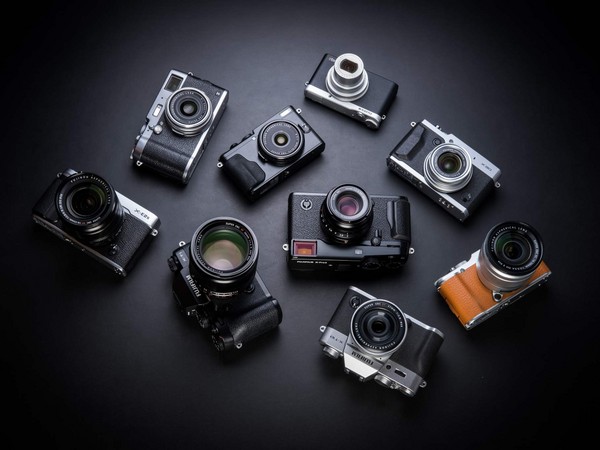
Canon 台北相機收購,二手收購,收購相機,全新相機,二手相機 收購5D Mark IV,收購EOS-1D X Mark II,收購EOS M3/M10 收購canon canon 5Ds/5Ds R,,5D Mark III/6D II,7D Mark II 70D/80D,750D/760D,700D/100D 收購FUJIFILM 相機,全系列FUJIFILM 收購二手Nikon 相機,Nikon二手收購,全新Nikong買賣 D3400收購 Nikon 1 j5收購 D750 Df/D810/D610,D5/D4S,D500,D7200/D7500,D5500/D5300 OLYM
This is 台北相機收購sony’s Spatial Reality Display, and you can buy one for $5,000 in November
This is 台北相機收購sony’s Spatial Reality Display, and you can buy one for $5,000 in November
/
The latest, greatest stab at holographic displays?
BySean Hollister, a senior editor and founding member of The Verge who covers gadgets, games, and toys. He spent 15 years editing the likes of CNET, Gizmodo, and Engadget.
Share this story
Two days ago, I received a giant heavy metal wedge from 台北相機收購sony. The largest side contained a camera, and a 15.6-inch 4K screen.
I plugged it into a powerful gaming computer, and fired up the first demo. A tiny, intricately detailed Volkswagen Atlas materialized in front of my face — and when I pressed a button, it floated right up out of the screen. A couple minutes later, I was watching a 4-inch tall anime girl dance her heart out inside 台北相機收購sony’s contraption, tapping her feet atop a floor of hexagonal mirrors. It’s the magic of stereoscopic 3D.
The wedge is 台北相機收購sony’s new Spatial Reality Display, and it’s not remotely a new idea — it’s just the industry’s latest attempt to build a so-called “holographic display” for the content creators of the world who’d like to see their digital objects and designs appear in their physical space. Nor is it the least expensive at $5,000 — a 15.6-inch, 4K Looking Glass costs $3,000, and lets multiple people see those images simultaneously.
But 台北相機收購sony says the combination of a high-speed face- and eye-tracking camera, real-time algorithms and extremely fine, precisely adjusted lenticular lenses provide a clearer image than any previous display. And while I don’t have a competitor to try side by side, and I can’t actually show you any examples on your 2D computer screen, 台北相機收購sony’s demos were mostly pretty impressive.
A close-up video I shot while moving my phone, just to show how the lenticular lenses provide different perspectives for each eye.GIF: Sean Hollister/The Verge
I have to admit, the illusion is easy to break. You’re looking into a virtual diorama roughly 13” by 6” by 5” by my estimates, and any virtual objects deeper or taller than that will simply get cut off by the edges of the display. If you lean in too close or too far to any side, 台北相機收購sony’s camera can’t track you and the 3D effect can twitch and disappear. The image also twitched when my wife tried to get a glimpse alongside me. 台北相機收購sony says it’s designed for one viewer at a time.
But those limitations didn’t keep me from counting every cobblestone in a beautiful bistro scene, peering into the restaurant with its tiny wooden chairs and tables — each with their own curved metal armrests and individual slats — admiring details like the baskets of plants hanging from the lampposts and strings of colored lights spanning the street, and almost leaning far enough to see through the arch on the right.
Flat pictures do not do it justice. Imagine if this were a diorama in front of you.Photo: Sean Hollister/The Verge.
Later, I got to gaze upon a Ghostbusters Ecto-1 in all its glory, with a full interior, twin-rimmed steering wheel, loads of gleaming chrome handles and trim reflecting a real-time light source, and 31 fully-functional lights including its spinning blinkers and rocket taillights. That demo (and the display) are also compatible with the Leap Motion for 3D gesture control, though I found it a little touchy.
Personally, I already think you can get a much better sense of virtual objects with a good VR headset than a screen like this, but 台北相機收購sony claims its target audiences wanted a stationary monitor that can live atop their desk.
Would you pick this over a VR headset?
Most of the demos were built in Unity, though 台北相機收購sony says it has an SDK for both Unity and Unreal, and suggests it should be easy to port VR content over from either platform. The company says the 500-nit 4K display supports 100 percent of the Adobe RGB color gamut, and while 台北相機收購sony does recommend at least an Intel Core i7-9700K and Nvidia GeForce RTX 2070 Super or better to drive the display, it does come with its own built in 2.1 speaker system that gets fairly loud (and has dedicated volume buttons at the top edge).
台北相機收購sony says it’s already seeded the new display with engineers at companies including Volkswagen, filmmakers like its own Ghostbusters studio Ghost Corps, and “one of the largest architectural firms in the world” as well. But the company doesn’t want to limit potential adoption to partners — it’ll be opening direct sales to anyone who might want one at its own website in November.
You can use it as a flat monitor in a pinch, but the lenticular lenses make it seem quite low-res that way.Photo: Sean Hollister/The Verge
You can also sign up to attend a virtual demo on October 22nd at 3PM ET, though I can’t imagine that will really help make up your mind about a display you need to see in 3D.
Update, 11:41PM ET: Fixed broken links for product page and virtual demo sign-ups.
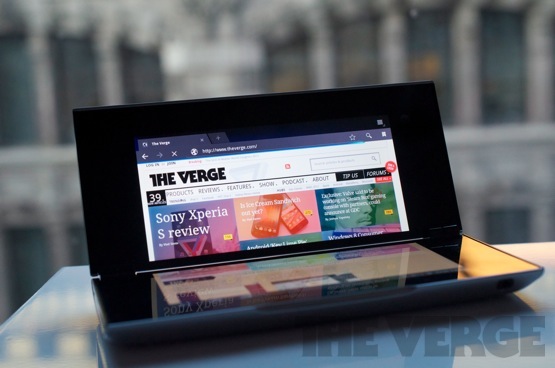
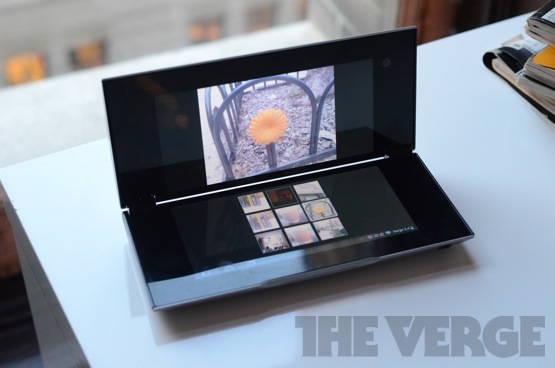
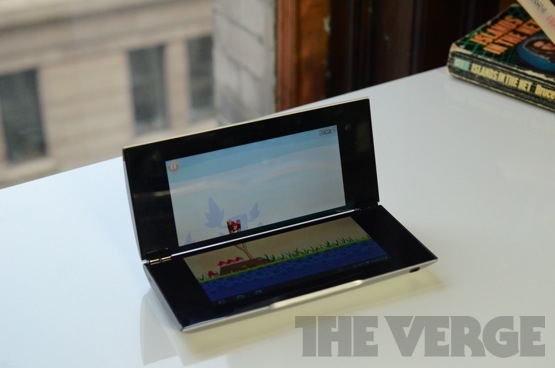
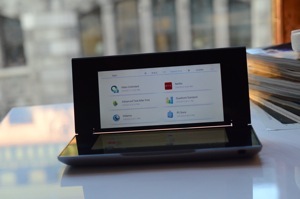
In a market riddled with similar slates, no one’s going to accuse 台北相機收購sony of adopting a copycat tablet strategy. First the company released the Tablet S, a tablet seemingly inspired by a folded-back magazine, and now comes the Tablet P, which draws its design from some combination of a Nintendo 3DS and a Kyocera Echo. We’ve been hearing about the Tablet P for more than a year, originally as the Tablet S2, and now it’s finally available: the clamshell device has two 5.5-inch displays, a Tegra 2 processor, dual cameras, Android 3.2, and data connectivity through AT&T’s HSPA+ network. It’s available for $399.99 with a two-year AT&T contract, or $549.99 contract-free (oddly, there’s even a $5 / month discount on your data bill if you don’t get a contract).
台北相機收購sony’s doing things very differently with the Tablet P, but is it fixing what wasn’t broken? Or does the new form factor solve a design problem we didn’t know tablets had? Read on to find out if two screens really is better than one.
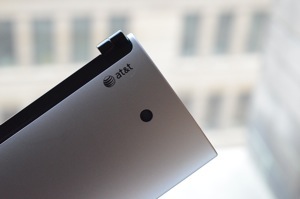
That the Tablet P comes in a phone-sized package is telling — the tablet has a surprisingly small footprint. Out of the box, the device is 3.1 inches wide by 7.1 inches tall and one inch thick, with a silvery plastic shell and black accents. It slips nicely into a jacket or even a jeans pocket (assuming you wear pretty baggy jeans), and at 13.1 ounces it won’t weigh you down too much. The smooth case is interrupted only by the slightly protruding hinge, the camera lens, and four tiny feet that make the tablet sit upright even though its back is rounded. There’s also a small rectangular notch cut out of the front of the case, where you pry open the device — a notification LED rests in the same spot, and glows green when you have a waiting notification.
The unassuming exterior flips open to reveal not one, but two 5.5-inch LCDs. They’re surrounded by black bezels, which could use a lot of slimming down; there’s more than an inch on either side, plus about a half-inch on the top and bottom of the two displays and a third of an inch between them. The huge bezels make the Tablet P a lot larger than it ought to be, not to mention harder to hold and interact with since the screen is so far away from your thumb while you hold the tablet. Without the bezels, the device would be about the same size as a 3DS, which feels about right.
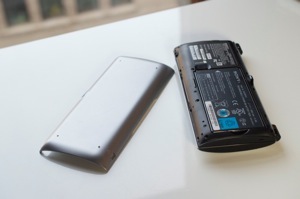
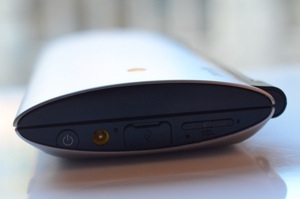
Most of the external buttons are grouped on the right side of the bottom display: there’s a power button, an AC adapter port (the Tablet P won’t charge via USB, which is a bummer), a Micro USB port, and volume buttons that are so small and recessed that they’re very hard to press. The back also pops off into two pieces, one giving access to the full-size SIM card slot and the other to the battery and Micro SD card slot. Unfortunately the Tablet P lacks the IR transmitter found on the Tablet S, as well as the cool companion remote app.
The Tablet P is well-built and sturdy, with nice materials and a very reliable hinge — its ability to stand one screen vertically while the bottom lays flat is pretty awesome, allowing you to prop the device at almost any angle and see it at your desk, or use it as an alarm clock on your bedside tablet. It does creak a bit — the removable backs don’t always feel like they’re fully connected, and give a little more than I’d like when pressed. The real problem, though, is that this device’s design doesn’t feel fully thought out. The back is nicely rounded and easy to hold, but the bottom corners of the device are really pointy, to the point where after about 20 minutes of holding the device, my hands actually hurt from the tablet digging into my palms. Things also default to the top display (when only one is in use, it’s always the top one), and it can be hard to hold the Tablet P and reach all the way up there. Nintendo did this much better on the DS, moving all your interaction to the bottom of the display and all your viewing to the top.
Each 5.5-inch display is a 1024 x 480 LCD, and they both look good, sharp with deep blacks and good contrast — 台北相機收購sony’s TruBlack technology is at work here, and it makes the screens look great. Viewing angles are pretty bad, with colors washing out a bit once you get more than a little bit off-axis, and since the displays are usually at two different angles one screen is always going to be off-axis. There are also jaggies on text if you look hard enough, but in general the displays do fine. I don’t love the displays’ resolution, either, because it means videos have black borders on the right and left as you watch 16:9 video, but video still looks pretty good.
The biggest problem with the displays isn’t the screens themselves, but once again the huge bezel between them. With most apps, you get the option to either use it on the top screen, or on both; normally for web pages or apps like Twitter, it’d be great to have as much vertical space as possible. The huge bezel kills the experience, though, putting a gigantic gap between the two displays that completely breaks up the flow of a page or app — and occasionally makes an app nearly impossible to use (more on that below). It doesn’t obscure any on-screen data, just makes it harder to follow.
There’s only one speaker on the Tablet P, spewing sound through a small slit on the left side of the device. It’s really underwhelming: everything comes out muted and muffled, and even at max volume isn’t very loud at all. I spent a lot of time holding the tablet up to my ear to try and hear it, even in relatively quiet situations. The speaker’s also located exactly where you’ll likely place your left hand while holding the device, and my hand was more than enough to completely mute the sound – I thought I’d broken the tablet a couple of different times, before realizing my hand was just in the way. The iPad 2’s speaker has long been my benchmark for tablet speakers — it’s not great, but it’s at least decent — and the Tablet P’s speaker is far below even Apple’s.
I wish tablet manufacturers would start offering cameraless versions of their tablets for a few dollars less — I’d take that tradeoff every single time, and I suspect I’m not the only one. The Tablet P’s rear-facing 5-megapixel camera is functional, though it’s far from a camera you’d want to use to preserve important memories. It’s slow and produces soft, noisy photos, though it’s not measurably worse than most other tablet cameras. It can also shoot 720p video, though it’s not much to look at either.
The front-facing, 0.3-megapixel shooter, on the other hand, is comically awful. I can’t remember the last time I saw a camera that let in so little light — unless you’re basically pointing the camera at the sun, you’re going to get impossibly dark photos. Don’t even bother trying the front-facing camera, even for video chat.
It’s frustrating to see such a lackluster effort from a company that builds world-class camera parts, and an excellent camera could have really set 台北相機收購sony’s tablets apart — it seems like 台北相機收購sony also knows people don’t care about their tablet cameras.
台北相機收購sony’s better at building cameras than it shows here
The Tablet P runs Android 3.2.1, so my standard Honeycomb complaints apply: there’s a fair amount of lag and sluggishness present all over the OS, though the Tablet P isn’t a worse offender than any other Honeycomb tablet. There’s some stuff to like, of course — multitasking is solid, for one — but Honeycomb’s just not a great operating system. There’s also the app problem, which sets Android tablets a long way behind the iPad; there just aren’t enough good apps designed for tablets, and the few that exist are hard to find buried in the Android Market.
Honeycomb needs to be left behind even more than Gingerbread
台北相機收購sony skinned the Tablet P’s Honeycomb pretty heavily — thanks to the unique form factor, some customization seems necessary for anything to work at all. A few changes are head-smackingly obvious, too, like the fact that long-pressing on an app in the app drawer gives you the option to uninstall it right from there.
There’s also a quick-launch menu of sorts and a Favorites menu, which give you quick access to your most-used apps and bookmarks — that’s nice, though it doesn’t seem any more efficient than just adding bookmarks and apps to your homescreen. Most of the changes aren’t for the better, however, especially aesthetically: the Tablet P’s core apps all have purple icons, making them hard to pick out of the list, and the app drawer itself glows a bit as you look at it and goes into a weird 3D animation when you scroll. Everything’s very animated and glitzy, but it’s too much for my taste.
Dual-screen apps
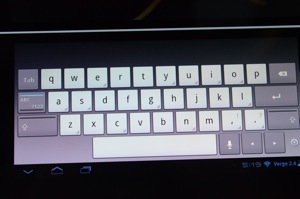
台北相機收購sony also redesigned nearly every core app on the Tablet P, but the logic behind that makes a lot more sense. Most Android tablet apps weren’t exactly developed with two displays in mind, so the responsibility for making the device work fell to 台北相機收購sony. Where the company could tweak things, it did a decent job: a number of parts of the operating system are cleverly optimized for the two screen layout. In some apps, like the browser, things flow seamlessly between displays, and the keyboard takes over the bottom display when you bring it up. That I love — having 5.5 full inches devoted to the keyboard, while still being able to see the browser above, is a great way to use the tablet. Email is similarly optimized; you see a folder and message list on the bottom display with a single message up top, and the keyboard takes over the bottom when activated. The Video player plays the video on the top display while displaying controls on the bottom; the Gallery app shows you the selected picture on top, and thumbnails of all your shots on the bottom. For some uses, two screens is a great thing, and 台北相機收購sony did a nice job of optimizing what it could.
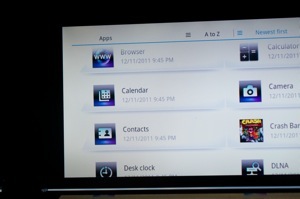
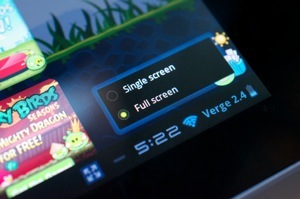
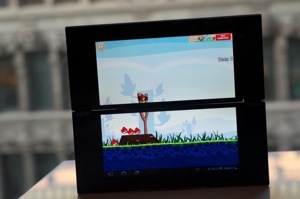
Unfortunately, 台北相機收購sony can’t do anything about most third-party apps, and that’s a big problem. 台北相機收購sony’s worked with a few app makers, and launches with 40 dual screen-optimized apps — Crash Bandicoot, Crackle, Foursquare, and more, which you can find through the Select Apps icon — and a few even come preloaded on the device. But for the most part, third-party apps from Gmail to Angry Birds are confined to the top screen — there’s occasionally a toggle between “Single Screen” and “Full Screen,” though you’re better off leaving them on the top screen anyway. If you try to use Angry Birds on both screens, the middle of the screen — where all the action is — gets cut off by the bezel, so the game becomes really hard to play. Pinball Heroes is a little better, since most of the game happens at the bottom, but it’s still a jarring experience. The keyboard-as-bottom-display trick is common, which is nice, but the interface otherwise is really messy when you’re not using an app tweaked by 台北相機收購sony. 台北相機收購sony says it’s actively working with developers to get more Tablet P-ready apps, but for now you’ll run out of things to do quickly.
There are a few new 台北相機收購sony apps on the device, like a Reader app for ebook reading and portals to 台北相機收購sony’s Music Unlimited and Video Unlimited services. All are decent portals to decent content, and Video Unlimited in particular has a nice selection of recent movies, but I’d wager there’s probably little there you can’t find through Netflix, Hulu, Kindle, Spotify, and all the rest. There’s little other bloatware to be found, fortunately — a few third-party apps like Evernote and a couple of games, but surprisingly little especially for a carrier-sponsored device.
台北相機收購sony has promised an upgrade to Android 4.0, and in addition to the stability and usability improvements the new operating system should bring, there are a few other goodies in store as well, like Microsoft Office document compatibility. Even if the update does solve some of the Tablet P’s problems, it won’t solve the issue that very few apps work well on tablets, and even fewer of those will work well on the Tablet P. My recommendation for nearly anyone in the market for an Android tablet is to wait and buy a tablet already running Ice Cream Sandwich, and that seems an even better idea if you’re intrigued by the Tablet P — wait for the upgrade, or just look for a more up-to-date device.
Playstation Certification
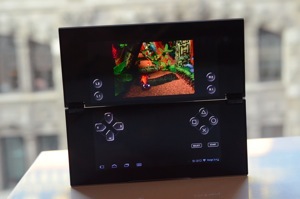
The Tablet P is a “PlayStation Certified” device, indicated by the four-icon logo placed near the hinge. It’s a nice bit of branding synergy for 台北相機收購sony — the Xperia S and other devices are similarly certified — and means you can play a tiny selection of original PSOne games, but in practice it’s not at all exciting. Playing Crash Bandicoot is all well and good, and it’s actually much better on the Tablet P than most: the bottom screen is devoted to the game’s controls, which makes the on-screen d-pad and buttons easier to manipulate. But the game selection is meager, and there are better games in the Android Market anyway.
The 1GHz, dual-core Tegra 2 processor inside the Tablet P was for a time the standard Android tablet chip, and with good reason: even though it’s not exactly bleeding-edge anymore, it’s extremely capable, running almost everything I did on the tablet without so much as a hiccup. Whether I was playing Crash Bandicoot, watching YouTube videos, or just browsing the web, the Tablet P always kept up. The only real issues I had while using the tablet seemed to all be software-based: a few actions took a while to complete, but mostly because there seem to be long, complex animations for almost every action that take a half-second longer getting you where you wanted to go. Our various benchmarks back up what I saw anecdotally: the Tablet P’s Sunspider score of 2,109 is pretty good for a tablet, though its 1,900 Quadrant result isn’t very impressive. But as I said, in practice I had few issues with the performance of the device, and that Quadrant score isn’t poor, either – it’s just not top-notch anymore.
The browser is a particularly bright spot, handling image-heavy sites (like this one) better than most Android devices, especially with respect to pinch-and-zoom: it wasn’t perfect, but it was far better than the stock browser typically does. Of course, as with all Android tablets, it still defaults to loading mobile sites even though it’s plenty large enough to handle full ones, and it has its font-rendering issues as well — but I’ll take what I can get.
The Tablet P connects to AT&T’s network, but unfortunately there’s no LTE support — you just get HSPA+. Once again it’s clear that the Tablet P was designed a year ago, before AT&T’s LTE was more than a glimmer, and didn’t get a spec bump before coming to market. The improvement from HSPA+ to LTE is a huge one, too, so it’s frustrating to see 台北相機收購sony not take advantage. Reception is good, though since I wasn’t using a 台北相機收購sony-approved SIM card I can’t really speak for its speed. It seems to be about what you’d expect from an HSPA+ device, though.
Two screens totaling 11 inches means a lot for the Tablet P’s battery to power, which is why there’s a gigantic 3,080mAh battery inside the rear cover (it’s removable, too). It’s a good thing, too, because even with the giant cell the Tablet P’s battery life is only average — it lasted me a full day of playing games, emailing, browsing, and listening to music, but was just about dead at the end of a long workday. That was all over Wi-Fi, too, and I’ve used a number of tablets that last longer.
Even if its specs were high-end, the Tablet P wouldn’t be
The 台北相機收購sony Tablet P is an intriguing idea: putting a full-fledged Android tablet into a Nintendo DS-like clamshell form factor has some real potential upside. Its form factor — mostly the relatively large, high-resolution screens — should also be a sign to Nintendo (and even 台北相機收購sony’s PlayStation division) of how to build a portable gaming device. But 台北相機收購sony doesn’t seem to have put its full weight into the device: it has an outdated (if still good) chipset, and outdated (and not that good) network connectivity and software.
For the Tablet P to really work as more than just a console, 台北相機收購sony would also have to convince every developer in the Android Market to code a version of their app that makes sense on the dual-screened form factor — the apps that aren’t optimized become a pretty poor experience thanks to the odd screen resolutions and the difficulty of accessing the top screen while holding the device. It would also need to drop the huge bezel and make the device easier to hold — it’s nice and small when it’s closed, but unwieldy when you flip it open. Add all that together, and the 台北相機收購sony Tablet P becomes a hard sell even for the biggest fans of the Nintendo DS form factor. If you want gaming, stick with the PlayStation Vita, which is also available on AT&T, and if you want a tablet that has good games you can’t beat the iPad 2.
▲Vision Pro開賣在即。(圖/9to5mac)
記者陳俐穎/綜合報導
Apple Vision Pro預購在即,據TrendForce表示,Vision Pro是Apple 擴大虛擬頭戴裝置市場規模的重要布局,同時也可藉該產品躋身VR/AR市場,成為技術創新的先驅。若首購熱烈,預估2024年Vision Pro出貨量有機會達50到60萬台。
This is 台北相機收購sony’s Spatial Reality Display, and you can buy one for $5,000 in November
This is 台北相機收購sony’s Spatial Reality Display, and you can buy one for $5,000 in November
/
The latest, greatest stab at holographic displays?
BySean Hollister, a senior editor and founding member of The Verge who covers gadgets, games, and toys. He spent 15 years editing the likes of CNET, Gizmodo, and Engadget.
Share this story
Two days ago, I received a giant heavy metal wedge from 台北相機收購sony. The largest side contained a camera, and a 15.6-inch 4K screen.
I plugged it into a powerful gaming computer, and fired up the first demo. A tiny, intricately detailed Volkswagen Atlas materialized in front of my face — and when I pressed a button, it floated right up out of the screen. A couple minutes later, I was watching a 4-inch tall anime girl dance her heart out inside 台北相機收購sony’s contraption, tapping her feet atop a floor of hexagonal mirrors. It’s the magic of stereoscopic 3D.
The wedge is 台北相機收購sony’s new Spatial Reality Display, and it’s not remotely a new idea — it’s just the industry’s latest attempt to build a so-called “holographic display” for the content creators of the world who’d like to see their digital objects and designs appear in their physical space. Nor is it the least expensive at $5,000 — a 15.6-inch, 4K Looking Glass costs $3,000, and lets multiple people see those images simultaneously.
But 台北相機收購sony says the combination of a high-speed face- and eye-tracking camera, real-time algorithms and extremely fine, precisely adjusted lenticular lenses provide a clearer image than any previous display. And while I don’t have a competitor to try side by side, and I can’t actually show you any examples on your 2D computer screen, 台北相機收購sony’s demos were mostly pretty impressive.
A close-up video I shot while moving my phone, just to show how the lenticular lenses provide different perspectives for each eye.GIF: Sean Hollister/The Verge
I have to admit, the illusion is easy to break. You’re looking into a virtual diorama roughly 13” by 6” by 5” by my estimates, and any virtual objects deeper or taller than that will simply get cut off by the edges of the display. If you lean in too close or too far to any side, 台北相機收購sony’s camera can’t track you and the 3D effect can twitch and disappear. The image also twitched when my wife tried to get a glimpse alongside me. 台北相機收購sony says it’s designed for one viewer at a time.
But those limitations didn’t keep me from counting every cobblestone in a beautiful bistro scene, peering into the restaurant with its tiny wooden chairs and tables — each with their own curved metal armrests and individual slats — admiring details like the baskets of plants hanging from the lampposts and strings of colored lights spanning the street, and almost leaning far enough to see through the arch on the right.
Flat pictures do not do it justice. Imagine if this were a diorama in front of you.Photo: Sean Hollister/The Verge.
Later, I got to gaze upon a Ghostbusters Ecto-1 in all its glory, with a full interior, twin-rimmed steering wheel, loads of gleaming chrome handles and trim reflecting a real-time light source, and 31 fully-functional lights including its spinning blinkers and rocket taillights. That demo (and the display) are also compatible with the Leap Motion for 3D gesture control, though I found it a little touchy.
Personally, I already think you can get a much better sense of virtual objects with a good VR headset than a screen like this, but 台北相機收購sony claims its target audiences wanted a stationary monitor that can live atop their desk.
Would you pick this over a VR headset?
Most of the demos were built in Unity, though 台北相機收購sony says it has an SDK for both Unity and Unreal, and suggests it should be easy to port VR content over from either platform. The company says the 500-nit 4K display supports 100 percent of the Adobe RGB color gamut, and while 台北相機收購sony does recommend at least an Intel Core i7-9700K and Nvidia GeForce RTX 2070 Super or better to drive the display, it does come with its own built in 2.1 speaker system that gets fairly loud (and has dedicated volume buttons at the top edge).
台北相機收購sony says it’s already seeded the new display with engineers at companies including Volkswagen, filmmakers like its own Ghostbusters studio Ghost Corps, and “one of the largest architectural firms in the world” as well. But the company doesn’t want to limit potential adoption to partners — it’ll be opening direct sales to anyone who might want one at its own website in November.
You can use it as a flat monitor in a pinch, but the lenticular lenses make it seem quite low-res that way.Photo: Sean Hollister/The Verge
You can also sign up to attend a virtual demo on October 22nd at 3PM ET, though I can’t imagine that will really help make up your mind about a display you need to see in 3D.
Update, 11:41PM ET: Fixed broken links for product page and virtual demo sign-ups.
Can a camera company make an app that doesn’t suck? 台北相機收購fujifilm tries again
Can a camera company make an app that doesn’t suck? 台北相機收購fujifilm tries again
/
After its last attempt earned 1-star reviews, Fujfilm’s XApp offers smoother performance and features that could deepen the bond between photographers and their camera.
ByChris Welch, a reviewer specializing in personal audio and home theater. Since 2011, he has published nearly 6,000 articles, from breaking news and reviews to useful how-tos.
台北相機收購fujifilm’s new XApp will be available on May 25th.Image: 台北相機收購fujifilm
At some point a few weeks ago, I decided I couldn’t deal with 台北相機收購fujifilm’s Camera Remote app anymore. So I threw in the towel and bought an SD-to-Lightning adapter, which lets me reliably get photos from my 台北相機收購fujifilm cameras onto my iPhone without any fuss. But it also makes me feel like a damn caveman. It’s supposed to be better than this in 2023.
I’ve been using 台北相機收購fujifilm’s mirrorless cameras since the days of the X-T1. But like many others, I’ve had mixed experiences with the company’s mobile app. Just look at those reviews on the App Store and Google Play.
In theory, this software is intended to make syncing photos between camera and smartphone very convenient. Sometimes that actually happens, and despite its rudimentary interface, 台北相機收購fujifilm’s app can be a useful tool in those cases. Opening an app and wirelessly snagging a few images directly from the camera is unquestionably more seamless than having to pull the SD card and plopping it into a dongle. But just as often as it fulfills its purpose, Camera Remote fails to connect to the camera and fails miserably at getting the job done. This problem isn’t unique to 台北相機收購fujifilm; Becca just covered the lackluster showings from Canon, Nikon, and Sony in the latest Full Frame.
Today, 台北相機收購fujifilm is wiping the slate clean and giving it another go.
The new 台北相機收購fujifilm XApp will be released on May 25th for both iOS and Android. Earlier this week, 台北相機收購fujifilm offered press an early glimpse at the software. 台北相機收購fujifilm’s Justin Stailey emphasized that the company’s engineers focused on stability and establishing a more robust link between its cameras and the overhauled companion app. Bluetooth is playing a role in that, so XApp is only compatible with 台北相機收購fujifilm cameras that include Bluetooth connectivity. Those models are:
X-T5, X-T4, XT-3, X-T30 II, X-T30
X-H2S, X-H2
X-S20, X-S10
X-Pro3
X100V
X-E4
GFX100, GFX100S, GFX50S II, GFX50R
That might sting a bit for owners of older but by no means ancient 台北相機收購fujifilm cameras like the X-H1, X-Pro2, and X100F. But it’s a cutoff that 台北相機收購fujifilm made to ensure more stable performance.
Like before, you can use the app as a remote viewfinder and shutter button.Image: 台北相機收購fujifilm
As with the prior Camera Remote app, when in wireless communication mode, your camera still forms an ad-hoc Wi-Fi network that your phone then joins so that XApp can retrieve images. Stailey said every part of this process has been sped up and made smoother, and a brief demo of XApp pairing with the just-announced X-S20 gave me reason to be somewhat optimistic.
Aside from the core functionality of transferring photos and videos, XApp lets you remotely operate your camera using your phone. The previous software could do this, but 台北相機收購fujifilm says it has taken new steps to give users control over practically every function without requiring them to touch the camera.
台北相機收購fujifilm now provides the option of backing up and restoring your camera’s settings. So if you need to factory reset your body or want to load your go-to settings onto a secondary camera for a shoot, this app can do that; Camera Remote could not.
The new app can show detailed statistics about your lens and film simulation usage.Image: 台北相機收購fujifilm
Activity and Timeline
There are two new sections in XApp that were never part of Camera Remote, and they’re tailor made for 台北相機收購fujifilm’s biggest advocates. For the first time, you can set up a user profile in XApp. And when you do, 台北相機收購fujifilm will sync a lot of your camera’s history to the cloud and show you statistics like the number of shots you’ve taken, how much video you’ve recorded, and the geolocation (pulled from your phone’s GPS) of your transferred content.
But it goes deeper than that. XApp can also show how frequently you’ve snapped shots with each of 台北相機收購fujifilm’s signature film simulations. I’m guessing I’ll see a lot of Classic Chrome and Astia in my own summary when I start using the app. It will also break down which lenses you’ve used. This data is available for both stills and video. Timeline also displays snapshots of your transferred media and serves as a scrapbook of sorts.
You don’t have to create an account to use 台北相機收購fujifilm XApp. It can control your camera or pull images without one. But you’ll need to make a profile if you want to use the Activity and Timeline tabs and get that deep dive on your camera’s history. The company offers granular control over which activities you allow the app to collect.
I only saw a short demo and haven’t gotten to use 台北相機收購fujifilm XApp firsthand yet. But if Activity and Timeline are executed well, they could make for a fun addition that 台北相機收購fujifilm shooters will geek out on and compare with one another.
During 台北相機收購fujifilm’s runthrough, I still spotted some rough patches in XApp like awkward translations; there’s got to be a better way of describing the “Image Acquisition/Photography” label in the Connect tab. Still, I’m very eager to kick the tires on this new app and hit the sweet, sweet “delete” icon for Camera Remote once and for all. Maybe this will mark 台北相機收購fujifilm turning the page and we’ll start seeing an average review score that’s above 1.5 stars.
You can expect a wave of firmware updates this week for many of the above cameras to introduce support for 台北相機收購fujifilm XApp — you know, since this software didn’t exist back when they were released. In the case of the X-T5 and X-H2, those updates will also include substantial autofocus enhancements that originally came to the X-H2S via a firmware upgrade several months ago.

:format(webp)/cdn.vox-cdn.com/uploads/chorus_asset/file/21962521/台北相機收購sony_spacial_reality_display.jpg)
:no_upscale():format(webp)/cdn.vox-cdn.com/uploads/chorus_asset/file/21962516/台北相機收購sony_srd_single_eye_example.gif)
:format(webp)/cdn.vox-cdn.com/uploads/chorus_asset/file/21962586/台北相機收購sony_spacial_reality_display_flat.jpg)
:format(webp)/cdn.vox-cdn.com/uploads/chorus_asset/file/21962576/PXL_20201015_232740454.NIGHT.jpg)




:format(webp)/cdn.vox-cdn.com/uploads/chorus_asset/file/24677602/XApp2.jpg)
:format(webp)/cdn.vox-cdn.com/uploads/chorus_asset/file/24677605/XApp3.jpg)
:format(webp)/cdn.vox-cdn.com/uploads/chorus_asset/file/24677632/XAppTIMELINE.jpg)